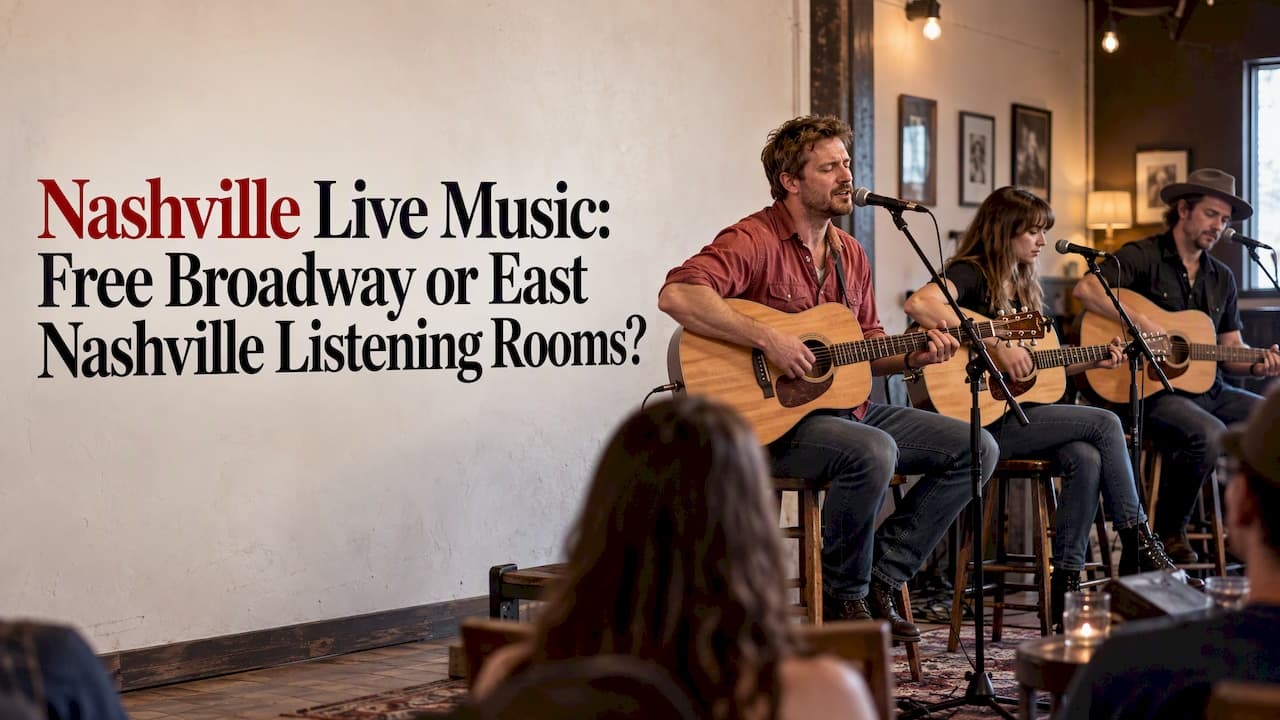
Nashville serves free honky-tonk sets on Lower Broadway, ticketed headline shows at the Ryman and Grand Ole Opry, and intimate songwriter rounds in East Nashville. Your quickest next step is to check the Nashville Music Calendar for tonight's listings, then book advance tickets for any big-room act you refuse to miss. Want a local night instead? Head to an East Nashville listening room.
TL;DR:
- Choose one neighborhood per night: crossing town between sets adds rides and waiting, while Broadway, East Nashville, and the Gulch offer distinct atmospheres.
- Book Ryman, Opry, arena, and popular weekend shows as soon as your dates are set; check venue pages for lineup changes, entry times, and policies.
- Listening rooms have limited seating, so RSVP when possible, arrive early, stay for more than one set, and keep conversation low and phones away.
- When a headline show sells out, compare resale seat locations and total prices, then read delivery and entry guarantees before paying.
Table of Contents
- Which Nashville neighborhood fits the night you want?
- Which major venues need tickets, and when should you buy?
- Where can you hear songwriter rounds and listening rooms?
- Where do you find tonight's schedule and special events?
- What should you know before you head out?
- How do you build one great live music evening?
- How did Nashville's live music history shape the scene today?
- What live music is there beyond country?
- What should first-time visitors expect?
- How do you buy tickets safely and effectively?
- Which annual festivals and showcases are worth planning around?
- How do you pair live music with dinner and nightlife?
- Why I mix marquee shows with local rooms
- Where to buy tickets when a headline show sells out
- FAQ
- Sources
Which Nashville neighborhood fits the night you want?
Nashville's live music scene is not one place. Each neighborhood has its own crowd, volume and price tag, and picking the right one matters more than picking a specific bar. Visit Music City says the city has over 250 live entertainment venues, so you have room to choose.
Here is how the main areas break down:
- Lower Broadway and Downtown: The honky-tonk corridor is loud, packed and mostly free, with bands playing back to back from midday into the early morning. Start at the river end and work uphill so you can drop into any room that has a band you like. Plan on tipping the band and buying a drink, since that is how the free model works.
- The Gulch: Expect mid-size venues, rooftop stages and restaurants that pair dinner with a set. The crowd skews mixed in age, which makes it a good pick for groups with different tastes.
- East Nashville: This is where you find indie, Americana and experimental acts in neighborhood bars and listening rooms. Many of the performers here are working musicians, so the focus is on the songs rather than the party.
- Midtown and Music Row: The energy is younger and later, with student-friendly venues and the feel of an industry neighborhood. It is a solid choice when you want a casual club night without the Broadway crowds.
- Franklin and the suburbs: Consider heading out of the core for festival-style grounds or quieter shows, especially when downtown hotel prices and traffic are at their worst.
A practical rule: pick one neighborhood per night. Hopping between all of them in an evening costs you more in rides and waiting than it gives you in music.
Which major venues need tickets, and when should you buy?
Nashville's big rooms sell the shows people plan trips around. Bridgestone Arena's event pages are a good model for what to confirm before you go: venue pages such as Rod Wave on October 14, 2026 list the address, box-office contact details and event logistics.
- Ryman Auditorium: The historic downtown hall hosts headline acts and special runs. Buy ahead for any recognizable name, since the room is intimate for the demand it draws.
- Grand Ole Opry: The country institution runs scheduled shows, and weekends and holidays fill first. Book early, and check the lineup closer to the date because bills can shift.
- Bridgestone Arena and Ascend Amphitheater: These host the large touring acts and typically need advance tickets. Bridgestone's own pages, like The Red Clay Strays event listing, show how doors, start times and details are laid out, so confirm them there before you leave.
- Marathon Music Works and mid-size halls: Great for rising national acts, and popular artists can sell out quickly even though the room is smaller.
For booking, buy as soon as you commit to dates when the act is a draw. Peak weekends and festival periods raise demand and thin out seats, so a Saturday show is the first thing to lock down. If a show has sold out at the box office, check resale availability before giving up, and read delivery and guarantee terms carefully. If you want a country show and the box office is out, our country music tickets page is a place to look.
Where can you hear songwriter rounds and listening rooms?
A listening room is a venue built around attention: the audience is expected to be quiet, seated and focused on the performer. A songwriter round puts several writers on stage together, trading songs and often telling the stories behind them. Both are different from a honky-tonk, where the band competes with conversation, and from a club, where the dance floor leads.
Venue listings highlight rooms such as The Basement East and The Blue Room at Third Man Records alongside bigger names, so a single night's calendar can show you both ends of the scale. The Mayor's Office of Nightlife also notes that January becomes a favorite month for locals with more intimate live shows and songwriter rounds, which tells you when the scene turns inward.
- Where to look: East Nashville bars, Midtown spots and dedicated listening rooms are the best starting points.
- Booking: RSVP or buy tickets when a room offers them, because seating is limited.
- Arrival: Get there early for a seat close to the stage, and stay for more than one set.
- Etiquette: Keep conversation low and phones away. The format only works if people can hear the lyrics.
Visitors who want to hear working musicians rather than a party band usually come away from these rooms with the most memorable night of the trip.
Where do you find tonight's schedule and special events?
You do not have to guess what is on. A few calendars cover nearly everything, and each one suits a different question.
- Nashville Music Calendar: It promotes itself as a nightly calendar tracking 121+ venues, and lets you find shows tonight or browse by genre and neighborhood.
- Visit Music City: The official visitor resource has venue pages, major events and ticket links, and recommends checking each venue's site for cover and reservation policies.
- do615 and venue pages: Use do615's daily listings for neighborhood-level searches, then confirm box-office info on the venue's own page.
- Community events: City-promoted showcases are worth planning around. 615 Indie Live, produced by MVAN and Visit Music City, was a February 7, 2026 showcase of independent venues and local artists, and the city points readers to mvan.org for participating venues and tickets.
Visit Music City reports Nashville has over 250 live entertainment venues, and much of its live music is free in honky-tonks, so a night out does not have to start with a ticket.
What should you know before you head out?
A few practical details separate a smooth night from a frustrating one.
- Know the cover situation. Honky-tonk sets are often free, while many other rooms charge a cover or require reservations. Check the venue's site before you go.
- Plan your parking. Downtown parking is tight. A rideshare or a venue lot is usually easier, and city materials describe the Metropolis Musicians Discount program, which offers parking discounts near Lower Broadway and other venues.
- Tip well. Tip the musicians and the staff. Many free sets run on tips and drink sales.
- Follow venue rules. Skip recording when a room discourages it and respect posted policies.
- Time your arrival. Arrive earlier for seated rooms and popular acts, and expect Broadway to be at its busiest late on weekends. Keep an eye on your belongings in crowds, and line up a ride home before you need it.
Pro Tip: Screenshot your ticket confirmation and the venue's address before you leave the hotel, because downtown cell service can slow to a crawl when a big crowd lets out.
How do you build one great live music evening?
Pick the goal first, then follow one of these three short plans.
- Broadway honky-tonk crawl: Start at the river end of Lower Broadway in the early evening, stay one or two songs per stage, and move up the street as bands change. Tip each band and keep a rideshare plan for the end of the night.
- Listening-room night: Eat dinner nearby, RSVP if the room takes reservations, arrive early for a good seat and stay for more than one set so you hear the full range of writers.
- Big show night: Check entry times and bag policies on the venue's event page, eat close to the venue before doors, and decide in advance whether you will park in a lot or take a rideshare.
How did Nashville's live music history shape the scene today?
Nashville's identity as Music City comes from decades of country music built around the Ryman, the Opry and the studios of Music Row. That foundation did two things that still shape your trip. It created a deep pool of professional musicians who need places to play every night, and it made songwriting a respected craft rather than a side job.
You can see both effects on any given evening. Broadway's honky-tonks employ bands that play long, tip-driven sets, while East Nashville rooms and songwriter rounds give writers a stage for original material. The city itself leans on this heritage: the Mayor's Office of Nightlife emphasizes that Nashville's music culture thrives on independent venues and local artists, and promotes showcases to match.

For you as a visitor, the history is a useful guide. The big historic rooms are the places for headline acts and ceremony, the Music Row area carries the industry feel, and the neighborhood venues carry the working-musician culture. Seeing one of each gives you a clearer picture of the city than any single stage can.
What live music is there beyond country?
Country gets the headlines, but it is not the whole calendar. Visit Music City notes a wide range of genres beyond country across the city's venues, and a quick look at a nightly listing shows rock, blues, jazz and indie sharing the same evening.
- Rock and pop: Large touring acts fill Bridgestone Arena and Ascend Amphitheater, while rising national acts play Marathon Music Works. Our pop and rock tickets category covers these headline shows.
- Blues and jazz: Smaller clubs and listening rooms tend to carry these, and the seated format suits them. Check the calendar's genre filter to find them.
- Indie, Americana and experimental: East Nashville is the center, with venues like The Basement East on the calendar.
- Symphonic and classical: do615 listings also include Schermerhorn Symphony Center alongside the clubs.
The simplest approach is to open the Nashville Music Calendar, filter by genre and neighborhood, and see what is on tonight. You may find a better night in a genre you did not plan for.
What should first-time visitors expect?
Expect volume, crowds and a casual attitude. Most venues are relaxed about clothes, so comfortable shoes and a layer you can shed beat anything fancy. Reserve the dressier option for a seated hall like the Ryman or the Opry if you want to make an occasion of it.
Etiquette is simple. Tip the band, because many sets are free to enter. Keep your voice down in listening rooms and during songwriter rounds. Do not record where it is discouraged, and follow venue rules posted at the door. Carry ID, since many bars check it, and keep a charged phone for tickets and rides.
On Broadway, you will be shoulder to shoulder on weekend nights and the music will be loud enough to talk over. If that sounds like too much, go early in the evening or pick a neighborhood room. Visit Music City recommends checking each venue's site for cover and reservation policies, which is the best habit a first-timer can build.

How do you buy tickets safely and effectively?
Start with the venue's own box office or its event page, since that shows the official price, doors time and policies. Bridgestone Arena's pages, for example, list the address and box-office contact details alongside each touring act.
Buy early for headline acts and weekend dates, and treat a sold-out notice as a cue to look at resale rather than a dead end. When you use a resale marketplace, check what protection it offers. Look for a clear guarantee that tickets arrive before the event and are valid for entry, and read the delivery terms before you pay.
A few habits keep you safe. Avoid buying from strangers on social media or from sellers who want payment outside a protected checkout. Compare the seat location and total price including fees before you confirm. Save your confirmation and keep the venue's contact details handy in case of a change.
Which annual festivals and showcases are worth planning around?
Festival-style events give you a concentrated look at the scene. The clearest example in our research is 615 Indie Live, which the Mayor's Office of Nightlife describes as a city showcase produced by MVAN and Visit Music City, celebrating independent venues and local artists. The 2026 edition was held on February 7, and the city directs readers to mvan.org for participating venues and tickets.
The same office also covers the city's year-end celebration: the January newsletter highlighted the success of Nashville's 2026 NYE Bash and framed January as the season for intimate shows and songwriter rounds. That rhythm is useful: big public celebrations around the holidays, then a quieter run of small rooms.
Festival periods push demand up for hotels and tickets alike, so plan early if your trip lands near one. For exact dates in future years, watch Visit Music City and the Nashville Music Calendar, which list major events and ticket links as they are announced.
How do you pair live music with dinner and nightlife?
Build the night around one neighborhood and let the food follow the music. In The Gulch, many venues pair dinner with a set, so you can eat and listen in one stop. Near the big arenas, eat before doors rather than after, since restaurants fill quickly once a show lets out.
For a listening-room night, eat nearby first, then arrive early for a seat. For a Broadway crawl, eat earlier in the evening and save the late hours for the stages, since the corridor runs long and food options thin out later.
Two tips keep things smooth. Book a dinner table for a time that leaves you a comfortable buffer before doors or the first set. And decide before you start whether you will drive, park in a lot or take rideshares, because nightlife areas get congested at closing time. Keep a late-night food option in mind for the end of the evening.
Why I mix marquee shows with local rooms
Our advice is to plan one big-name show and spend the other nights in independent rooms. The marquee venues are worth the ticket, but the neighborhood stages are where you hear working musicians and find artists you have never heard of. Check the city and MVAN event listings, and try a community showcase like 615 Indie Live when your dates line up. Supporting those venues keeps the whole scene alive.
— Capital
Where to buy tickets when a headline show sells out
When a popular act sells out at the box office, or you decide at the last minute, we can help. At Nashville Ticket Brokers, we run a resale marketplace for concert, sports and theater tickets, and check the terms of each purchase for any guarantee covering ticket delivery and validity for entry.
A resale marketplace is most useful for sold-out headliners, festival-weekend demand and late changes to your plans. Because tickets here can sell above face value, compare the price and seat before you buy.

Browse our concert tickets, then narrow down by country music tickets or pop and rock tickets to see what is available for the night you want. You can also start from our homepage and look up your artist.
FAQ
What kind of music is Nashville famous for?
Nashville is best known for country music, but the city's venues also host rock, blues, jazz, indie and more. Visit Music City notes a wide range of genres beyond country across its live entertainment venues. Check the Nashville Music Calendar's genre filter to see what is on.
What is there to do in Nashville tonight?
Open the Nashville Music Calendar and filter by tonight, neighborhood or genre. Honky-tonks on Lower Broadway are often free, while listening rooms and large venues may need tickets or reservations. Confirm cover and reservation policies on the venue's own site first.
How do I find free live music in Nashville?
Much of Nashville's live music is free year-round in honky-tonks, especially along Lower Broadway. Tip the band and buy a drink, since that is how those sets are funded. Some venues still charge a cover, so check before you go.
Do I need to buy tickets in advance for the Ryman or the Opry?
For popular acts and weekend or holiday dates, yes. Both are best booked early, and the venue's event page shows doors times and box-office details. If a show sells out, check resale availability and read the guarantee terms before you buy.
Sources
- Nashville Nightlife | Visit Nashville TN
- Nashville Live Music Calendar & Schedule | Every Show, Every Night
- mAYOR’S OFFICE OF NIGHTLIFE NEWSLETTER
- mAYOR’S OFFICE OF NIGHTLIFE NEWSLETTER